
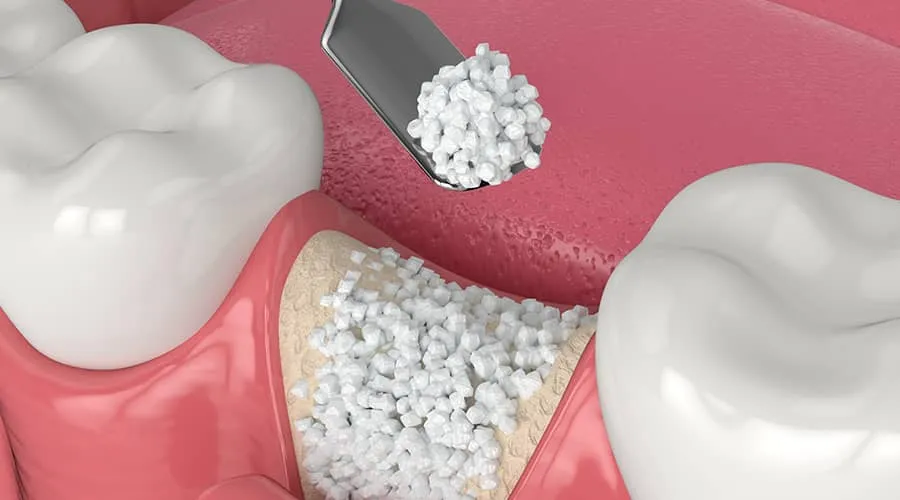
If you are exploring dental implants, your oral surgeon may have mentioned bone grafting. This procedure is often considered when the jawbone does not have enough structure to properly support an implant. This can happen after tooth loss, periodontal disease, or trauma, since bone naturally begins to change once it no longer has a tooth root to support it. Because a stable foundation is essential for implant planning, your oral surgeon needs to evaluate the available bone before moving forward. At Boston Oral Surgical & Endodontic Associates, located at Lewis Wharf in Boston, we guide patients through this evaluation with care, using advanced imaging to help determine the right path toward a healthy, confident smile.
Why Might You Need Bone Grafting Before Dental Implants?
You may need bone grafting if your jawbone does not have enough volume or density to support an implant on its own. Once a tooth is lost or extracted, the surrounding bone can begin to shrink or reshape itself over time. Since implant planning depends on a solid foundation, your oral surgeon will assess how much bone remains in the area. CBCT 3D imaging allows us to closely examine bone volume, density, and nearby structures, such as sinus anatomy, so treatment can be planned around your specific needs.
What Causes Bone Loss in the Jaw?
Several factors can contribute to bone loss in the jaw. These include:
- Tooth loss or extraction, which removes the stimulation the bone needs to maintain its shape and density.
- Periodontal disease, which can gradually damage the bone that supports your teeth.
- Trauma or injury, which may affect the structure of the jaw.
- Sinus position, since the upper jaw sinus can sit close to the bone needed for implant placement.
Not every patient with these conditions will need bone grafting. Whether it applies to you depends on your individual anatomy and treatment goals.
What Types of Bone Grafting Are Used for Dental Implants?
Several bone grafting techniques may be considered, depending on the location and extent of bone loss.
- Socket preservation helps maintain bone structure right after a tooth is removed.
- Ridge augmentation rebuilds width or height along the jaw.
- Sinus lift, or sinus augmentation, adds bone beneath the sinus in the upper jaw.
- Guided bone regeneration uses a barrier to encourage new bone growth in a specific area.
How Does an Oral Surgeon Decide if You Need Bone Grafting?
An oral surgeon determines the need for bone grafting through a combination of clinical examination and CBCT imaging. This process evaluates bone volume, bone quality, sinus anatomy, and how an implant would ultimately be positioned. Because every patient’s anatomy is different, this evaluation is highly individualized. In some cases, grafting takes place before implant placement. In others, it becomes part of a broader, staged treatment plan.
What Can You Expect During Bone Grafting Treatment?
Bone grafting treatment typically follows a structured process that begins with consultation and imaging.
- Consultation and imaging allow us to assess your bone and plan your treatment.
- The grafting procedure is performed using sedation or anesthesia options tailored to your comfort.
- Healing and follow-up give the graft time to integrate with your existing bone.
At Boston Oral Surgical & Endodontic Associates, we may also use PRF and PRP, which are derived from your own blood, as regenerative support during healing. These are not guarantees of a specific outcome, but tools that may assist the body’s natural healing response.
How Does Bone Grafting Support Your Dental Implant Plan?
Bone grafting helps rebuild deficient bone so it can better support an implant-supported restoration in the future. Your oral surgeon plans the implant with the final restoration in mind, which means grafting is often just one part of a coordinated approach. At BOSEA, our oral surgery and restorative providers work together throughout this process. It is important to know that grafting does not guarantee implant eligibility, since healing and anatomy vary from patient to patient.
Wondering if Bone Grafting Is Right for You? Contact BOSEA Today!
Whether you need bone grafting before dental implants depends on your bone volume, oral health history, and overall treatment goals. Every patient’s anatomy is different, which is why a thorough evaluation is an essential first step. Boston Oral Surgical & Endodontic Associates, located at Lewis Wharf, proudly serves patients throughout Boston, the North End, Seaport, and the greater Boston area. If you would like to learn more about your options, contact us at 617-302-8203 to schedule a consultation.